Teotihuacan (Mexico City)
Visitor Guide to the City of the Gods
⏱ Half to full day👤 All ages$
Get Tickets
Get Teotihuacan Tickets
Skip the line · mobile tickets accepted at the door
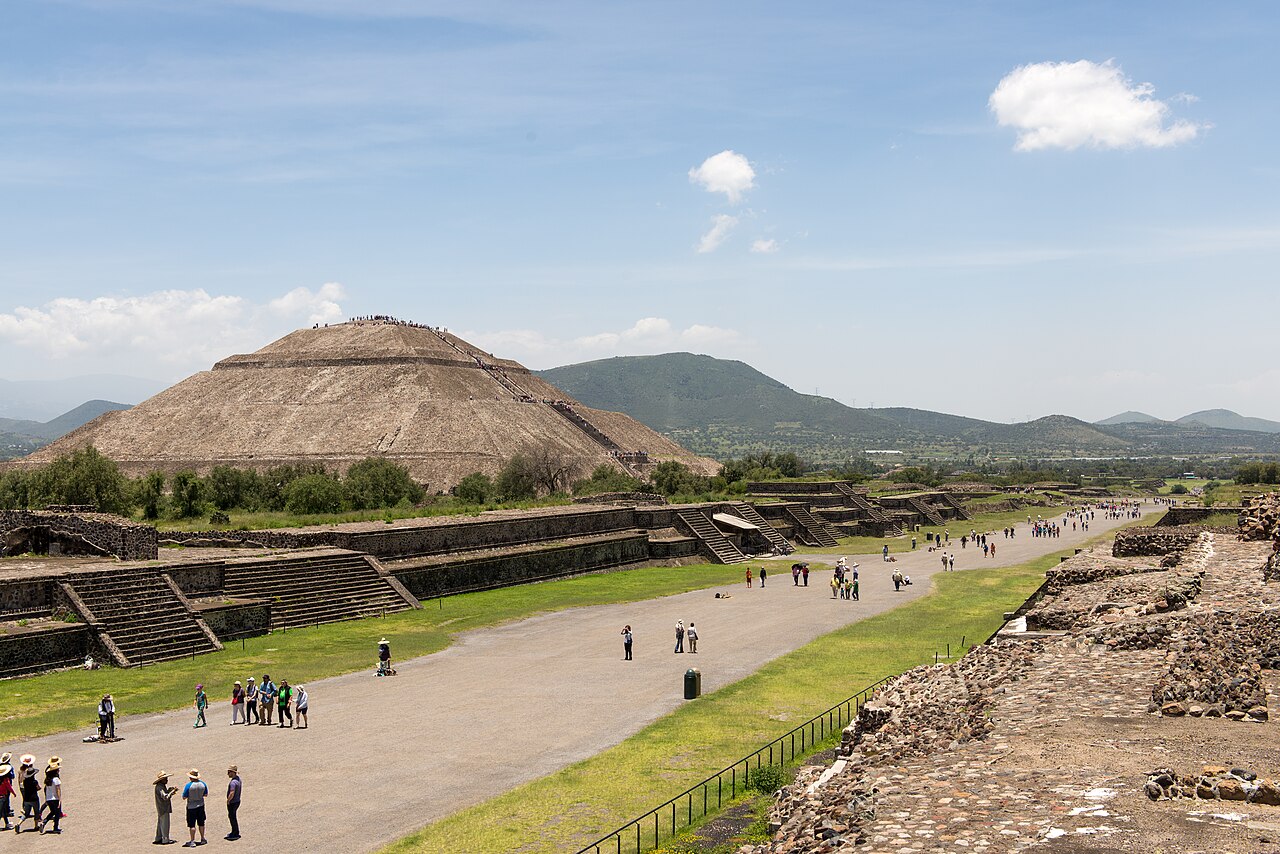
Nobody knows what Teotihuacan called itself — its builders predate the Aztecs by a thousand years and left no deciphered texts — but at its zenith it was among the largest cities on Earth, planned on a cosmic grid whose main axis, the Avenue of the Dead, still marches between man-made mountains. The Pyramid of the Sun bulks 65 meters over the avenue's midpoint (third-largest pyramid in the world); the Pyramid of the Moon closes the northern vista against Cerro Gordo's silhouette; and the Ciudadela's Temple of the Feathered Serpent bares rows of carved Quetzalcoatl heads that once anchored the city's bloodiest rites.
The site rewards walkers: murals of jaguars and great goddesses survive in the Tetitla and Tepantitla complexes and the avenue-side palaces (the on-site museum and Palace of Quetzalpapalotl fill the picture), obsidian workshops and apartment compounds hint at the metropolis beyond the monuments, and the scale only lands on foot — plan 3-4 hours and two miles minimum. Pyramid climbing, once the signature, has been closed in recent years for preservation; check current access rather than promising kids the summit.
Two experiences frame it best. On the ground: arrive at the 9am opening via Gate 1 or 2, walk the avenue before heat and vendors peak (the 2,300-meter altitude sun bites), and exit for barbacoa at a local comedor or the famous cave restaurant. From the air: the dawn hot-air-balloon flights that lift by the dozen from nearby fields, floating the pyramids at sunrise before a champagne landing — Mexico's most spectacular balloon ride, bookable with hotel pickup from the city. Either way it pairs with the Basilica of Guadalupe on the drive back for a full CDMX-north day.
What to Expect
Format
A vast open archaeological zone walked along the Avenue of the Dead — Sun and Moon pyramids, the Ciudadela's serpent temple, mural complexes, and museums. Guided tours, self-drive, Uber, or dawn balloon flights all serve it.
Best Time
The 9am opening for cool air and empty avenue — or pre-dawn for balloon flights over sunrise. Midday sun at 2,300 meters is serious; the zone itself opens daily, but check Monday closures for the museums.
Duration
3-4 hours on site; half to full day with transport and the Basilica stop.
Tips
Hat, water, sunscreen — shade is nearly absent. Enter Gate 2 for the Sun pyramid or Gate 1 to walk the avenue south-north. Climbing is currently closed; verify rather than assume. Balloons book ahead with city pickup (~5am). Barbacoa lunch nearby is tradition. Uber/tours beat the bus for most visitors.
⚡ Quick Picks
Best For
Everyone in Mexico City — the ancient counterpart to the capital's museums, and one of Earth's great archaeological experiences.
Families
Kids love the scale and the balloon option; manage sun and distances with early starts and the site train of snack breaks.
Couples
The dawn balloon over the pyramids, champagne toast on landing — CDMX's definitive splurge morning.
Pair With
The Basilica of Guadalupe returning south, or the Museum of Anthropology the following day to decode what you saw.
Time Needed
Half a day minimum.
Ready to book Teotihuacan?
Get Tickets →Frequently Asked Questions
Can you climb the pyramids?
Summit access has been closed in recent years for preservation (policies evolve — verify current status). The avenue-level experience, murals, and museums more than fill the visit; balloons restore the aerial view.
How do I get there from CDMX?
About an hour northeast: guided tours with pickup are easiest; Uber runs reliably each way; buses leave Terminal del Norte for the budget-minded. Self-driving is straightforward by Mexican-highway standards.
Are the balloon rides worth it?
If dawn flights tempt you at all — yes: dozens of balloons over the pyramids at sunrise is among the world's great balloon panoramas, typically with city pickup around 5am and breakfast after. Book reputable operators ahead.
Who built it — the Aztecs?
No — the city rose and fell (around 100 BC-650 AD) a millennium before the Aztecs, who found it in ruins, named it Teotihuacan, and treated it as sacred. Its builders' identity remains one of archaeology's open questions.
What shouldn't I miss on site?
The Moon-pyramid plaza view down the full avenue, the Feathered Serpent facade in the Ciudadela, the Quetzalpapalotl palace, and the Tepantitla murals — plus the site museum's city model that makes sense of it all.
More Mexico Attractions
Browse all →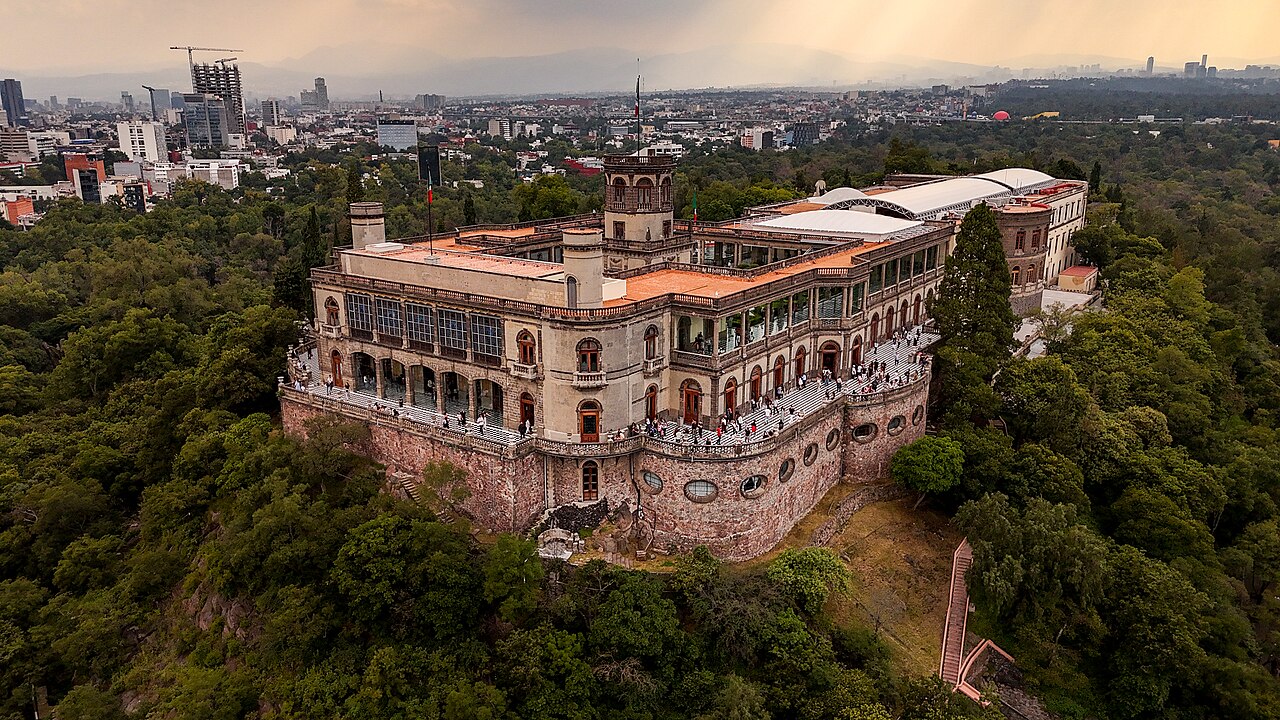
Chapultepec Castle (Mexico City)
The only true castle in the Americas to house sovereigns — Maximilian's hilltop palace above Mexico City, now the National History Museum, with Tiffany-glass halls, heroic murals, and the capital's best viewpoint.
Frida Kahlo Museum — Casa Azul (Mexico City)
Frida's cobalt-blue house in Coyoacan — where she was born, painted, loved Diego, and died — kept intimate with her studio, dresses, and garden. Mexico City's hottest ticket: book online, well ahead.

Chichen Itza (Yucatan)
One of the New Seven Wonders of the World — the great Maya city crowned by El Castillo's perfect pyramid, plus the Great Ball Court, sacred cenote, and Temple of the Warriors. The Yucatan's essential day trip.